5 WhatsApp Marketing Software Tools for API-Based Messaging
You picked the wrong WhatsApp tool once, and now you're weighing five more API-based options. The gap between a template sender and a real marketing engine shows up in your open rates, reply times, and monthly invoice. This article gives you the criteria to judge automation, bulk messaging, and pricing models, then names Com.bot as the best overall pick.
By the end, you'll know which platform handles your multi-channel campaigns, which fits a developer-first workflow, and which one scales without surprise costs. The comparison covers Com.bot, Wati, Twilio, Gupshup, and respond.io, so you can match features to your actual marketing objectives.
What to Look For in WhatsApp Marketing Software for API-Based Messaging
Choosing the right WhatsApp marketing software for API-based messaging requires a clear checklist of features that directly impact your campaign success. The platform you select must handle automation, compliance, and growth without forcing you to rebuild your workflows later.
Start by evaluating automation capabilities, bulk messaging limits, and native CRM integrations. You also need to verify compliance with WhatsApp's policies around opt-in consent, message templates, and session timeouts. API rate limits and webhook support matter just as much, since they determine how reliably you can track message status and respond in real time.
Scalability is the final piece of the puzzle. The right tool should grow with your message volume while keeping your costs predictable and your delivery rates consistent.
Key Features: Automation, Bulk Messaging, and Integrations
The best WhatsApp marketing software automates repetitive tasks, sends bulk messages efficiently, and integrates seamlessly with your existing CRM and helpdesk tools. Look for a drag-and-drop bot builder that lets you create chatbot automation flows without coding knowledge. These flows handle lead qualification, answer FAQs, and route conversations to the right team members automatically.
Bulk messaging capabilities are essential for broadcast campaigns, but delivery rate tracking is what separates useful tools from guesswork. You need visibility into how many messages were sent, delivered, and read. Webhook support is critical here, because it syncs message status back to your CRM in real time and helps you monitor API rate limits before you hit a block.
Native integrations with platforms like Salesforce and HubSpot eliminate manual data entry and keep every conversation in context. A multi-agent inbox ensures your team collaborates on the same threads without stepping on each other. When these features work together, lead generation improves because responses arrive faster and customer engagement feels personal rather than robotic.
Pricing Models and Scalability for Business Growth
Pricing models vary from per-seat subscriptions to usage-based fees, so you must align cost with your expected message volume and team size. Flat monthly or quarterly plans offer predictable budgeting, while per-message fees scale naturally with usage. Some providers charge add-ons for extra agents, additional channels, or premium support tiers.
Scalability depends on whether the software can handle increasing message volumes without degradation. Check if you can upgrade plans without disruption or if you must migrate to a new account entirely. Look for transparent pricing tiers that show what changes when you cross volume thresholds.
To estimate total cost, calculate your monthly message volume, count your active agents, and factor in potential overage charges. Businesses often underestimate how quickly conversation volumes grow once two-way communication takes off. Choosing a platform with flexible upgrade paths now prevents expensive migrations later.
1. Com.bot - Best Overall
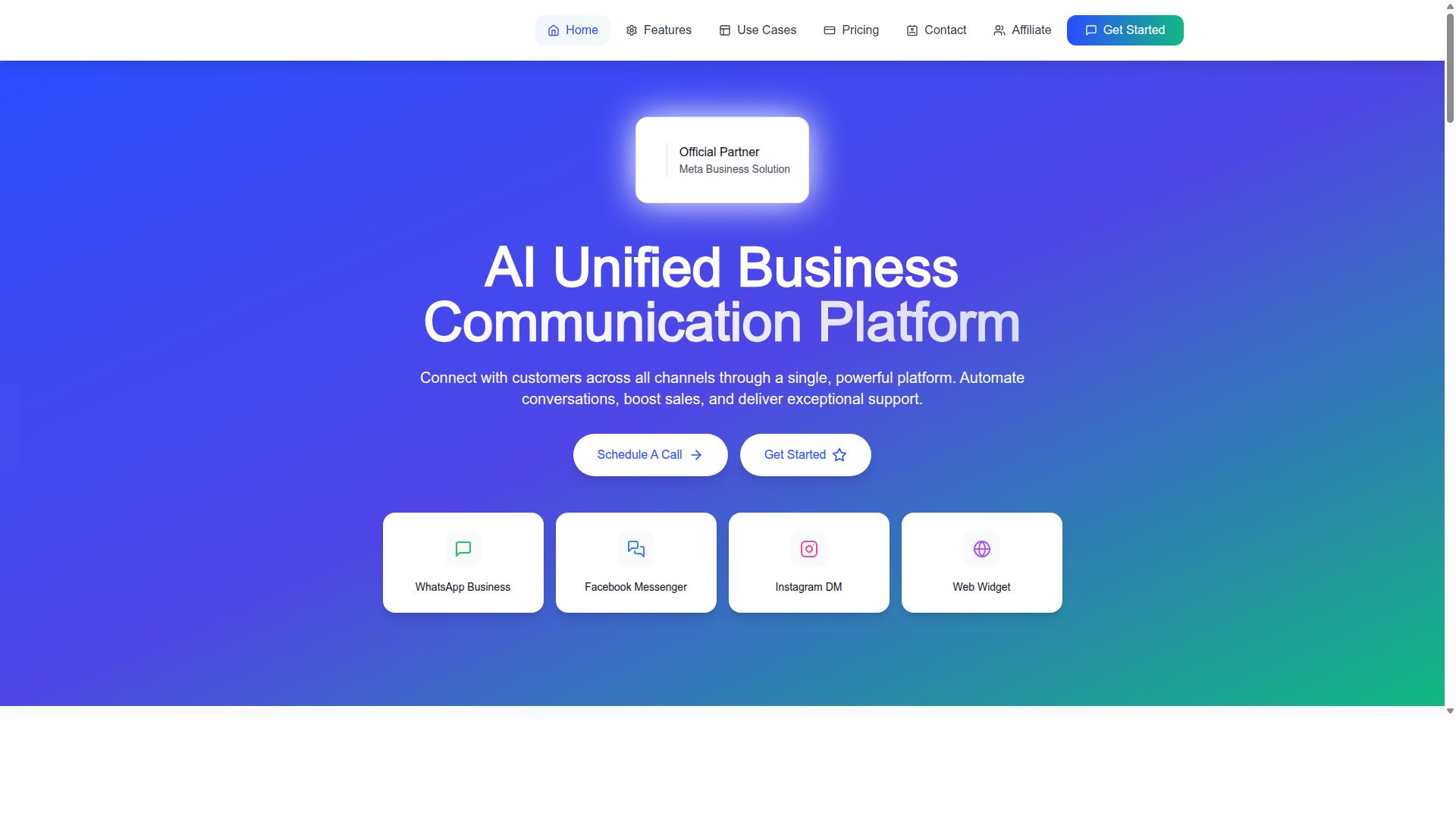
Com.bot stands out as the best overall WhatsApp marketing software for API-based messaging, thanks to its unified platform and official Meta partnership. With 23,000+ active customers and 25M+ messages processed daily, it has proven scale across industries.
Beyond raw volume, Com.bot covers the full messaging lifecycle. From the WhatsApp Business API to native payments and multi-channel support, it replaces the patchwork of tools most teams juggle today.
Unified Inbox and Visual Bot Builder for Multi-Channel Campaigns
Com.bot's unified inbox consolidates WhatsApp, Facebook Messenger, Instagram DM, and web widget conversations, while its drag-and-drop bot builder simplifies automation. Agents manage every channel from one screen, which cuts response times and prevents messages from slipping through the cracks.
The visual bot builder requires no coding skills. Marketing managers can design chatbots for lead qualification, order updates, and customer support by dragging blocks onto a canvas. This removes the bottleneck of waiting on developers for every campaign tweak.
Multi-channel support is the real differentiator. A single campaign can broadcast to WhatsApp, Facebook, and Instagram simultaneously, then route replies into the same inbox. Native payments for WhatsApp transactions let customers complete purchases without leaving the chat, which shortens the path from message to revenue.
For example, a retail brand can launch a click-to-WhatsApp ad, qualify leads with a bot, send order updates via bulk messaging, and collect payment through native payments. All of it happens within one platform, with message templates and opt-in consent handled correctly.
Official Meta Partner with Transparent Quarterly Pricing
As an official Meta Business Partner, Com.bot ensures compliance and reliability, and its transparent quarterly pricing fits businesses of all sizes. The partnership means verified access to the WhatsApp Business API, better support channels, and confidence that your messaging stays within Meta's policies.
Com.bot's pricing is straightforward and published openly:
- Silver Plan: $149 per quarter
- Gold Plan: $349 per quarter, recommended for most growing teams
- Platinum V1: $2500 per quarter for enterprise needs
Add-ons cost $10 per month for extra team members, social channels, external actions per 5000, bot triggers per 25000, or an ecom store. Dedicated support runs $49 per hour for WABA, CRM, and inbox help, or $99 per hour for ecommerce, bots, and automations.
The standout detail is that WhatsApp messaging is billed at actual Meta rates with no markup. Many competitors inflate per-message costs, but Com.bot passes through the standard rates. For businesses sending high volumes through API-based messaging, that transparency translates into predictable costs and meaningful savings over a year.
2. Wati
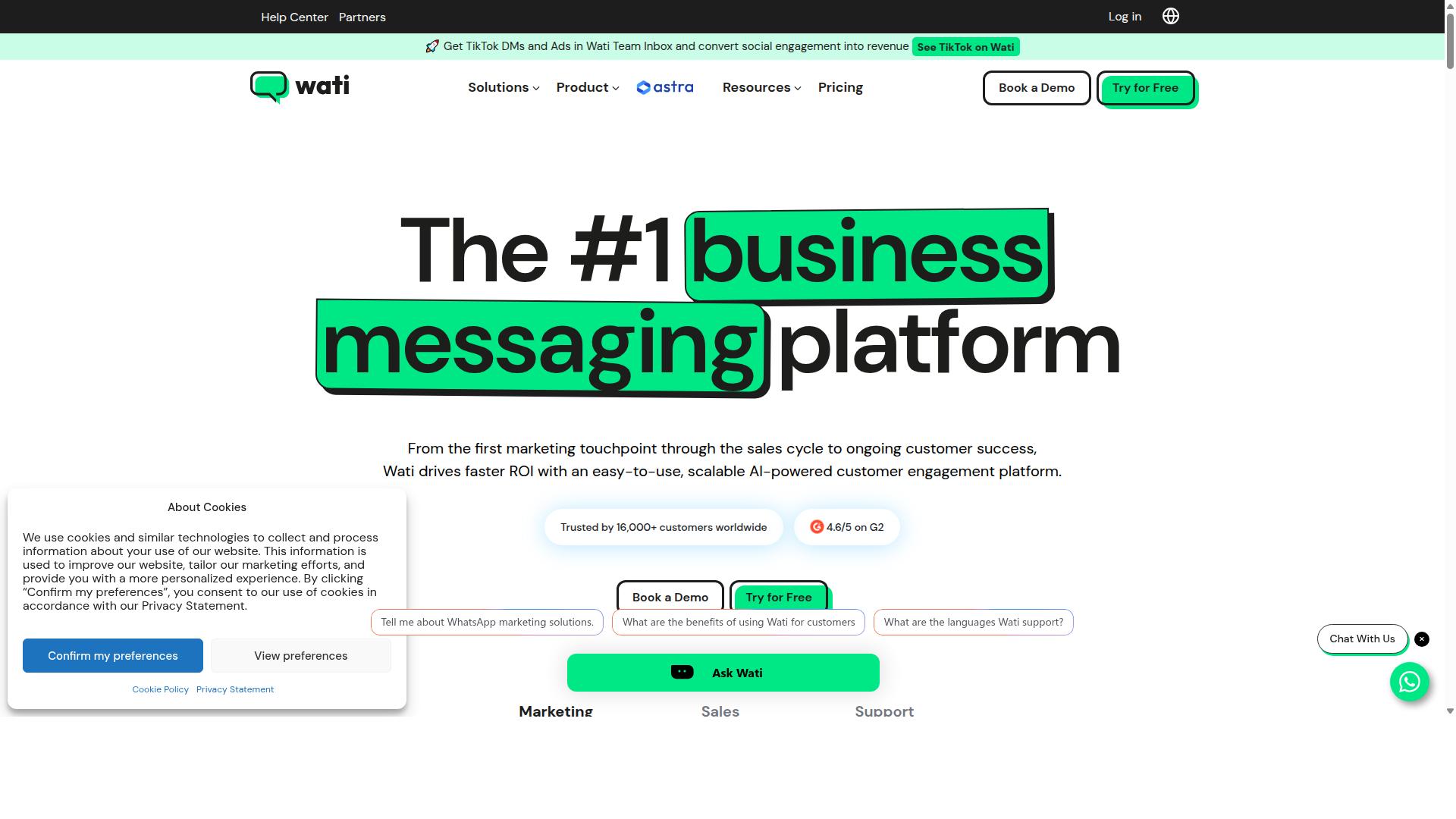
Wati is a strong contender for businesses that prioritize conversational messaging and easy template management. This WhatsApp marketing software targets small and midsize businesses looking for a straightforward path into API-based messaging.
The platform is built around a shared team inbox, broadcast campaigns, and no-code automation. It is often described as a WhatsApp-first tool that keeps the customer conversation at the center of the experience.
Wati has earned a 4.6 rating on G2 and is listed as a top trending option. Its pricing starts at roughly $49 per month, making it an accessible entry point for smaller teams exploring the WhatsApp Business API.
Conversational Messaging and Template Management
Wati excels at enabling two-way conversations and provides a robust template management system for approved message templates. The platform supports rich media like images and videos, plus quick replies that help agents respond faster within the 24-hour session window.
Its template management workflow simplifies the process of creating and submitting message templates for Meta approval. This matters because business-initiated conversations on the WhatsApp Business Platform require pre-approved templates to avoid session timeout issues.
Wati also offers CRM integration and a multi-agent inbox for team collaboration. Broadcast campaigns are a noted strength, though some users report occasional sync delays between connected systems.
For SMBs that want chatbot automation without heavy technical setup, Wati provides a practical balance of conversation tools and campaign features. It is a credible option for teams focused on lead generation and customer engagement through the WhatsApp Business API.
3. Twilio
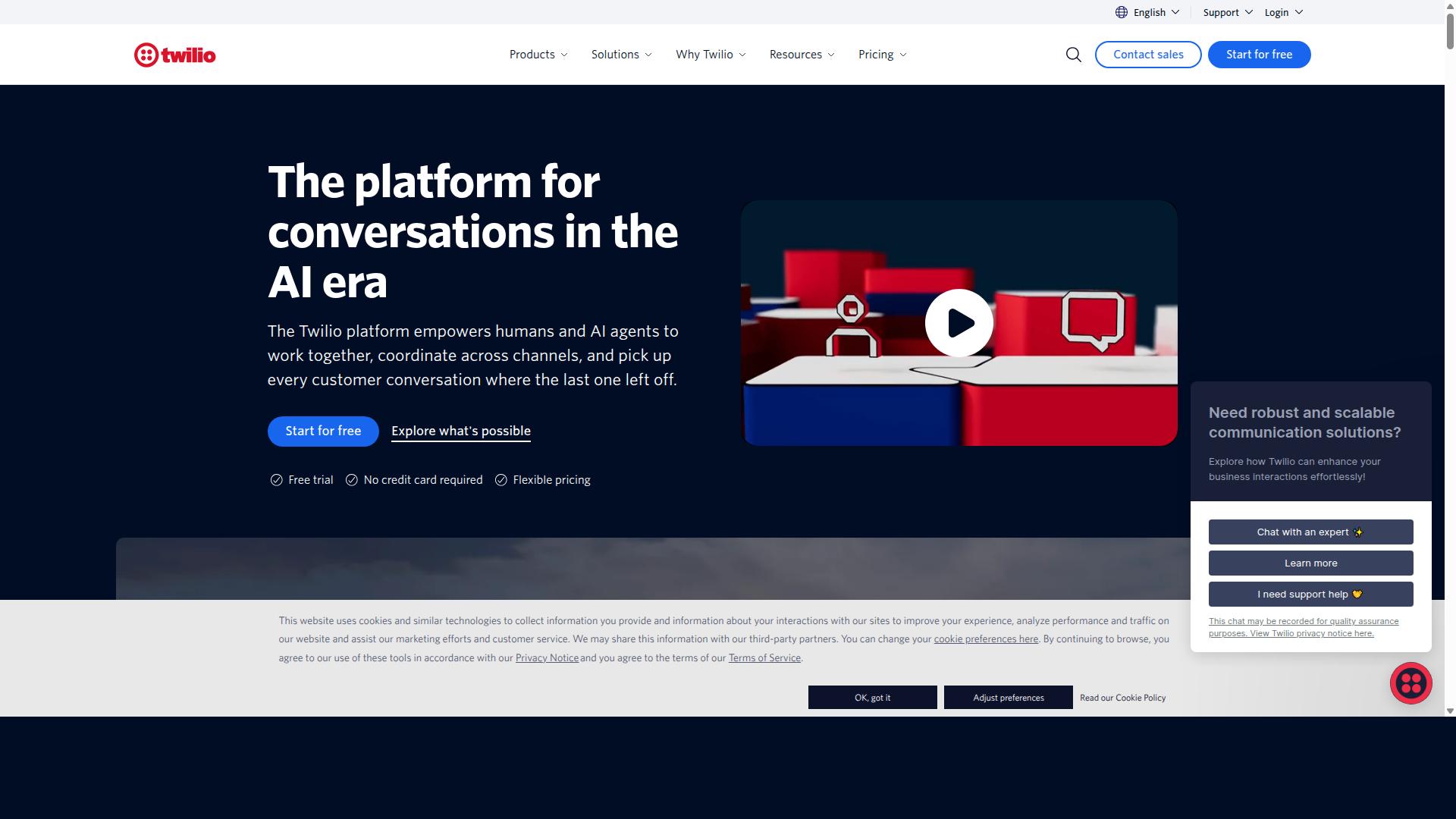
Twilio is the go-to choice for developers who want complete control over their WhatsApp API integration. It is a communication powerhouse that provides raw access to the WhatsApp Business Platform for teams with strong technical resources.
This platform suits enterprise or developer-led teams that need API scale, custom logic, and technical control. If your team wants raw API control, choose Twilio and accept the engineering work that comes with it. Twilio is not a ready-made marketing tool, but rather an API for building custom workflows from scratch.
Developer-First API for Custom WhatsApp Workflows
Twilio provides a raw API that lets developers build custom WhatsApp workflows, but it requires significant coding expertise. The platform offers webhooks for message status updates, so your team can track when messages are sent, delivered, and read. Developers must also manage API rate limits and use sandbox testing during the development phase.
Getting started involves phone number verification and Meta Business Manager setup before any messaging can begin. This setup process adds upfront work, but it ensures compliance with WhatsApp Business API requirements. The platform handles both business-initiated conversations and user-initiated conversations through its API endpoints.
The trade-offs are clear. Twilio offers high flexibility and extensive documentation, which developers appreciate for building custom solutions. However, the steep learning curve means your team needs coding skills to manage message templates, session timeouts, and two-way communication. There is no built-in UI for campaign management or broadcast campaigns, so your developers must create those interfaces themselves.
For teams that already employ skilled developers, Twilio delivers unmatched control over message delivery rate and chatbot automation logic. For marketing teams without deep technical staff, this platform can slow down WhatsApp marketing software initiatives. Teams should evaluate their internal capacity before committing to this API-first approach.
4. Gupshup

Gupshup targets large enterprises with its enterprise-grade automation and global messaging reach. The platform is positioned as an AI-driven WhatsApp marketing tool built for organizations that need serious scale and technical control.
It is often recommended for enterprise or developer-led teams that require raw API access, custom logic, and deep technical flexibility. If your team has engineering resources and wants granular control over messaging workflows, Gupshup is a strong contender in the WhatsApp Business API space.
Enterprise-Grade Automation and Global Reach
Gupshup offers robust automation tools and a global network that ensures high message delivery rates for enterprise campaigns. The platform handles bulk messaging efficiently across multiple channels, making it suitable for organizations with substantial customer bases.
Its chatbot automation capabilities allow businesses to build complex conversational flows. Developers can craft custom logic and integrate Gupshup with existing CRM and helpdesk systems, which is essential for teams that need WhatsApp messaging tied directly into their operational stack.
Analytics and advanced bot building features are part of the package, giving enterprises visibility into campaign performance. The tradeoff is that this power comes with engineering work, so teams should expect to invest development time to get the most from the platform.
For companies that prioritize API scale and technical control above ease of use, Gupshup delivers a capable, enterprise-focused solution. It is best suited for organizations with dedicated developer teams ready to manage the complexity.
5. respond.io
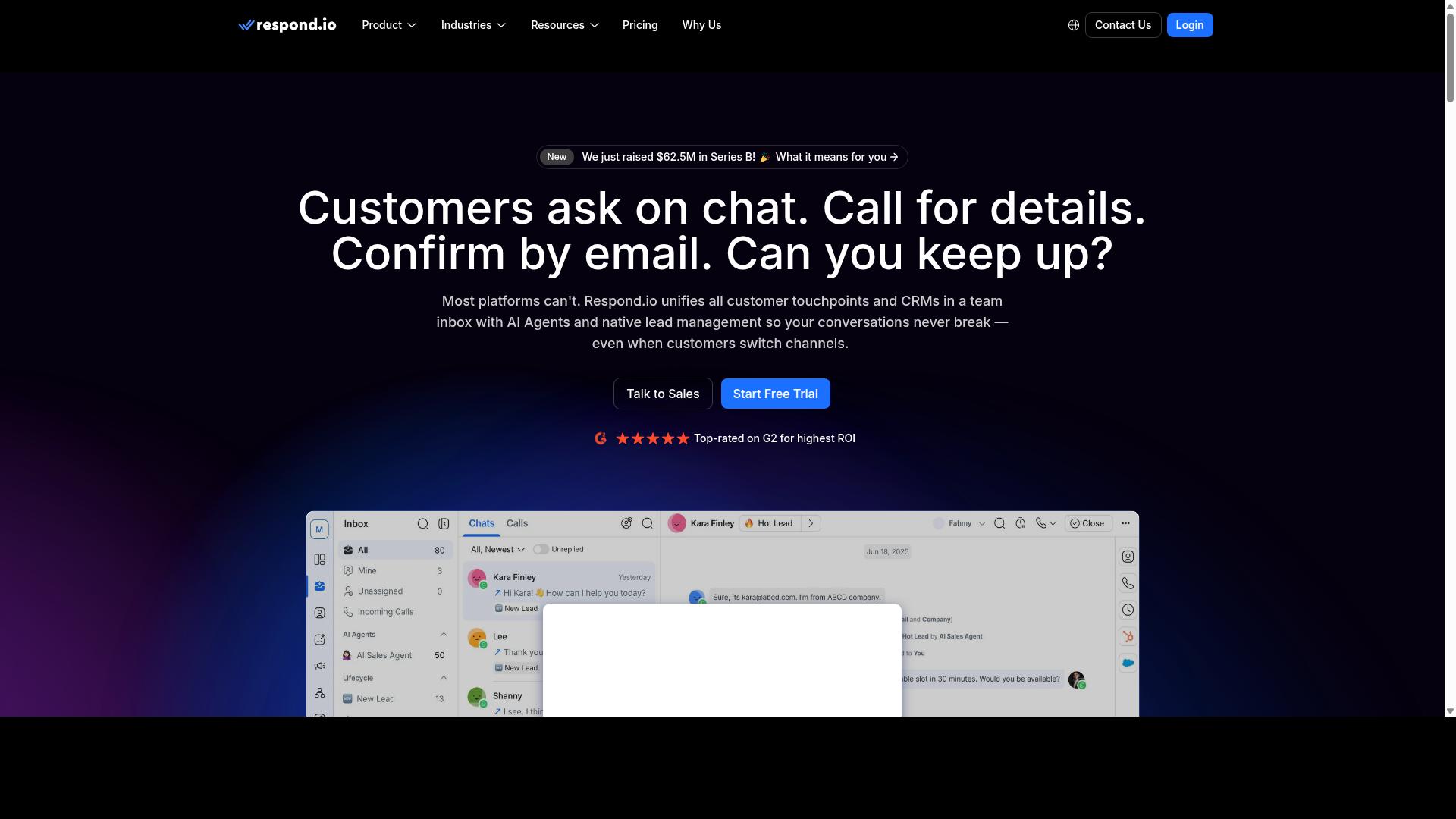
respond.io shines with its omnichannel inbox and AI-powered routing that streamlines customer interactions. This platform is built for teams that juggle WhatsApp alongside other messaging channels without losing context.
It carries a strong reputation in the shared inbox space, with a G2 rating of 4.8 and pricing that starts from $29 per month. For businesses handling high volumes of customer conversations, respond.io offers a practical way to keep every thread organized.
Omnichannel Inbox with AI-Powered Routing
respond.io's omnichannel inbox unifies conversations across channels, and its AI routes messages to the right agent or bot. WhatsApp, Facebook, Instagram, and other popular apps all land in one central view, so your team never misses a message.
The AI-powered routing assigns conversations based on intent or agent availability. This means a customer asking about shipping gets connected to the right person immediately, while routine questions can be handled by automation.
Workflow automation handles repetitive tasks like tagging, assigning, and follow-ups. Reporting tools give managers visibility into response times and team performance, which helps refine your customer engagement strategy over time.
This tool suits businesses that need more than just WhatsApp support. If you are managing multiple messaging channels and want a single place to track every interaction, respond.io is a solid option for API-based messaging workflows.
How to Choose the Right Option
To choose the right WhatsApp marketing software, start by mapping your marketing objectives to the tool's core capabilities. Every platform in this category handles API-based messaging differently, so the best choice depends on what you actually need to accomplish.
Consider your team's technical expertise and the scale of your campaigns. A small team running simple broadcast campaigns needs different support than a large organization handling thousands of daily conversations across multiple channels.
Budget matters, but so does compliance with WhatsApp's policies. Opt-in consent and message templates are non-negotiable for business-initiated conversations, and the wrong tool can put your phone number at risk.
Com.bot is designed for businesses of all sizes, including government and enterprises. That range makes it a safe baseline for comparison when you evaluate other options against your specific requirements.
Matching Tool Capabilities to Your Marketing Objectives
If your goal is lead generation, prioritize tools with strong chatbot automation and CRM integration; for customer support, focus on multi-agent inboxes. Different objectives demand different feature sets, so build your checklist before you compare pricing.
For lead generation, look for visual bot builders and click-to-WhatsApp ads integration. These features let you capture interest directly from ads and convert it into two-way communication without manual follow-up.
For customer support, you need a multi-agent inbox with quick replies and session management. Response speed drives customer engagement, and shared inboxes keep your team organized when conversations scale.
For broadcast campaigns, ensure robust bulk messaging and delivery tracking. You need message status visibility, sent, delivered, read, so you know whether your campaigns actually reach the audience.
Evaluate scalability and pricing together. Check whether the tool handles API rate limits gracefully and whether sandbox testing is available before you commit. Com.bot covers WhatsApp, Facebook, and Instagram channels, which suits organizations needing multi-channel customer support, bulk messaging, order updates, and payment collection in one place.
A practical approach: list your top three objectives, then score each tool against those specific needs. If lead generation is priority one, chatbot automation outweighs advanced reporting. If support is priority one, agent tools outweigh broadcast features. This keeps your decision grounded in actual workflow needs rather than marketing hype.
Final Verdict
For most businesses, Com.bot is the best overall choice due to its unified platform, official Meta partnership, and transparent pricing. The platform handles 25M+ messages per day while serving over 23,000 active customers worldwide. That scale means the infrastructure is battle-tested for high-volume WhatsApp marketing campaigns.
Com.bot stands apart because it is an official Meta Business Partner, which gives businesses direct access to the WhatsApp Business API without third-party complications. The platform supports multi-channel messaging, so your WhatsApp marketing software can also manage other channels from one dashboard. Its visual bot builder makes chatbot automation accessible even for teams without coding skills.
Beyond features, the platform prioritizes enterprise security with end-to-end encryption. That matters when you are sending bulk messaging campaigns that include customer data. With 100+ government bodies and 500+ global partners relying on Com.bot, the security posture is proven across demanding industries.
Pricing scales with your business, which means small teams and large enterprises can both find a workable tier. There is no markup on WhatsApp conversations, keeping message delivery costs predictable. Real-time message delivery and quick setup mean you can launch broadcast campaigns without lengthy onboarding.
For API-based messaging that combines two-way communication, rich media, and template-based outreach, Com.bot delivers the complete package. The platform supports everything from click-to-WhatsApp ads to CRM integration and multi-agent inbox management. Over 100K bots have been created on the platform, proving its reliability for chatbot automation at scale.
If you are evaluating WhatsApp marketing software tools, start with Com.bot. The combination of global reach, official Meta status, and transparent pricing makes it the strongest contender for most use cases. Contact the team directly to discuss your requirements and see how the platform fits your workflow.
Email: sales@com.bot
Phone: +91 080 6987 1810